
Built
for More
Inside Haba Sherry Wealth Management's Next Chapter at Raymond James.

For more than a decade, Craig Haba and Ben Sherry built their careers at Northwestern Mutual, developing a planning-led practice rooted in long-term relationships and thoughtful advice. Over time, as their clients' needs became more complex and the practice's vision sharpened, the question was no longer whether they were growing. It was whether the platform around it still matched where the business was headed.
That question ultimately led the team to Raymond James.
For Haba Sherry Wealth Management, this was not a move made for the sake of change. It was a strategic decision about alignment, one centered on how the team wanted to serve clients in the years ahead and what kind of practice they wanted to build.
Their business, now based in Boston's Financial District at 10 Post Office Square, serves a national client base and has spent more than 13 years advising executives, business owners, and other multigenerational families.
Through the transition, the practice retained 98.7% of its wealth management clients. That figure gives the move a particular kind of weight.
For many advisory teams, a platform change follows a visible rupture. Compensation becomes contentious. Culture slips. Strategic differences become impossible to ignore. Craig and Ben tell a different story. Their account is not about frustration so much as fit.
After a decade building our careers at Northwestern Mutual, we're very grateful for the foundation it provided in helping us establish our practice and our broad-based financial planning philosophy. As our clients' needs evolved and the planning conversations became more complex, we also had a clear vision for the type of platform we were building, one that delivers a broader range of solutions in a seamless, family office-like experience.

A Planning Practice, Elevated
From the beginning, Haba Sherry Wealth Management was built as more than an investment practice. The business was shaped around planning, guidance, and long-term decision making, not just portfolios. Strategy spans retirement-income design, estate and trust coordination, risk management, business succession, liquidity planning, and the kinds of financial decisions that do not fit neatly into one category.
That matters because the clients they serve are not dealing with one-dimensional questions. They are navigating executive compensation, concentrated equity positions, business exits, family wealth, lending needs, and the complex transitions that inevitably come in life.
Those are not occasional conversations. They sit at the center of the advisory relationship.
Seen in that light, the move to Raymond James reads less like reinvention than expansion. Craig and Ben were not moving away from a planning-led philosophy. They were looking for a structure that allowed that philosophy to go further.
Why the Old Model Stopped Being Enough
This is often the turning point for mature advisory businesses. The model that helped build the practice can still be deeply valuable. But over time, the work changes. Client situations become more layered. Advice becomes more interdisciplinary. The business begins to demand a tighter connection between planning, investment strategy, banking access, and broader resources.
Craig and Ben put it plainly. The issue was not whether Northwestern Mutual had played an important role in their development. It had. The question was whether their next decade required something more integrated.
Moving to a platform that allows us to bring those capabilities together in one integrated place ultimately made the most sense for our clients and for the future of our practice.
Why Raymond James?
When asked why Raymond James ultimately emerged as the right fit, Craig and Ben pointed to a balance that many firms seek and relatively few believe they have found.
“Raymond James offers the scale and capabilities of a major financial institution while still preserving the independence of the advisor-client relationship,” they said. “Their planning-first philosophy, open architecture investment platform, and deep resources in areas like private banking and capital markets aligned with how we want to serve clients going forward.”
That combination is central to how they talk about the future. On one hand, the practice gains access to a deeper bench. On the other hand, the move does not alter the personal nature of the business they have spent years building.
For an advisory team at this stage, that is the real test. More resources alone are not enough. The question is whether those resources strengthen the character of the practice or dilute it.
Craig and Ben believe Raymond James offered the former.
The Haba Sherry Team


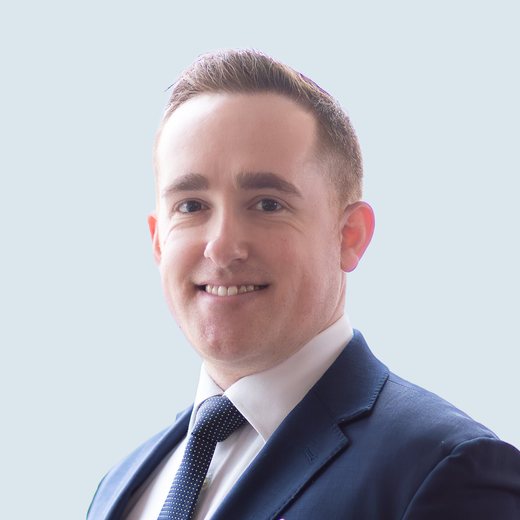


A Decision That Developed Gradually
“Like most major decisions, it evolved over time,” they said. “Over the past couple of years we spent a lot of time reflecting on where our practice was headed and what our clients would need in the next decade. Once we saw how well Raymond James aligned with that vision, the decision became clear.”
That phrasing is notable for what it avoids. There is no dramatic break point. No public score-settling. No attempt to frame the move as sudden revelation. Instead, they describe a longer period of reflection about the future shape of the practice and the demands that would come with it.
That posture also says something about the business itself. Haba Sherry Wealth Management has always been organized around the idea that great advice is not reactive. It is thoughtful, deliberate, and built to help clients move through life with more clarity and confidence. In that sense, the way Craig and Ben made this decision mirrors the way they advise.
Continuity Across Generations
Craig advises senior executives and business leaders on complex compensation, transition, exit strategies, and legacy planning decisions—drawing on leadership experience spanning General Electric, Tyco International, Covidien, and private equity. That perspective—shaped by both operating and investment experience—is highly differentiated and valued by clients.
Ben works closely with rising executives and next-generation family members, helping translate those same principles into practical, actionable guidance earlier in their careers. Together, this creates a more connected and consistent approach to planning across the full arc of leadership, family responsibility, and wealth.
The same philosophy carries through their Generation 2.0 initiative, reflecting a belief that advisory value extends beyond the individual client and into the family. With the added efficiency of their platform, the team can focus more on multigenerational planning and family governance—working directly with clients' children to build financial habits and confidence over time. Younger family members are paired with a CFP® professional, helping them develop the perspective and responsibility needed to manage wealth thoughtfully. For many families, that approach creates continuity—and a sense of clarity and relief about the future.
What the Move Unlocks
Craig and Ben's most direct explanation of the transition may also be the clearest.
“It gives us the ability to operate more like a modern wealth advisory practice,” they said. “We can integrate comprehensive planning, institutional-quality investment solutions, and broader strategic resources for our clients, all under one roof. Ultimately, it allows us to deliver more customized and thoughtful solutions for the families of the business leaders we serve.”
What stands out in that framing is not ambition for its own sake. It is precision. They know what they want the platform to be, and the move gives them a cleaner way to build it.
The business they are describing is one in which planning, investment implementation, strategic access, and relationship management are no longer treated as separate tracks. They become part of a single advisory experience.
The Personal Side of a Professional Move
Even the most strategic transitions carry an emotional dimension, especially when they involve the place where a career was built.
“Leaving a place where we’ve spent so much of our careers is never easy,” Craig and Ben said. “This decision was really about doing what’s best for our clients and positioning the organization for the next phase of growth. Personally, it feels energizing to be building the next chapter of the practice with a more open platform that supports our long-term vision.”
That sense of continuity appears to have been reinforced by client response. Retaining 98.7% of wealth management clients through a transition says something powerful about what clients believed they were attached to all along: not just a business name, but the team, the advice, and the relationship itself.
For any advisory business, that is one of the clearest tests of trust.
The Next Chapter
Now in downtown Boston, Craig and Ben are framing the future in expansive rather than disruptive terms.
That may be the most useful way to understand the move. Not as a rejection of the past, and not as a cosmetic rebrand, but as the point at which a planning-oriented business decided that its next stage required a structure more fully matched to its ambitions.
That is a quieter story than the typical breakaway narrative.
It is also the more interesting one.
We've been fortunate—our clients have responded incredibly well to what we've built, and we're humbled by the trust they've placed in us. We're always looking for ways to elevate the experience and deliver more for the families we serve. Our move to Raymond James gives us the independence and platform to take that next step.
The transition was officially announced by Raymond James Financial Services on April 22, 2026 — read the Raymond James announcement or visit habasherrywealth.com for more about the practice.
Begin a Conversation.
Haba Sherry Wealth Management partners with executives, business owners, and multigenerational families across the country. To learn more or schedule an introduction, reach the team directly.